Auejin Ham
한국어I completed my compulsory military service as a technical research personnel from February 2023 to 15 March 2026, and I currently work at Cupix. I received Master's degree at School of Computing, KAIST (advisor: Prof. Geehyuk Lee).
GitHub · Google Scholar · Twitter · Email · Full CV (PDF)
Read the full biography
I design interaction paradigms that translate complex human intent into precise machine execution — spanning low-level physical sensors, haptic interfaces and multi-agent AI systems.
My work began with physical constraints where ground-truth answers exist. At 17, I built an eye-tracking phone interface for quadriplegic users that earned a spot on Korea's Intel ISEF delegation. As a researcher at DGIST, KAIST and NVIDIA Research, I quantified the millisecond-level impacts of latency and jitter on human performance, publishing first-author work at top-tier HCI venues like ACM UIST.
I extended this focus to subjective, ungrounded interactions as Technical Research Personnel at bHaptics. There, I engineered real-time tactile software pipelines across iOS, Android and Windows with sub-20 ms latency, turning open-ended human perception into reliable, deployed software products.
Currently, as a Technical PM and Software Engineer at Cupix, I design systems that govern the stochastic nature of LLMs through deterministic engineering. I built Issue Fixer, an autonomous agent system that operated unattended for five months — processing 924 production bugs with a 92.2% root-cause accuracy. I also engineered Isopod, a multi-agent harness that converts natural-language specs into state machines, and led the technical delivery of Beacon Chat, a conversational AI product for construction digital twins.
Across physical sensing, user studies and agentic orchestration, my goal is to lead multi-disciplinary teams in defining the next interface standard for complex AI environments — turning ungrounded, probabilistic interactions into rigorous, real-world systems.
Experience
- What
- A company that turns buildings and construction sites into 3D digital twins people can look back through. I work on the frontend and as technical PM.
- Why
- Sites lose network, yet the desktop app fetched everything from the server, and QA filed bugs faster than the team could absorb them.
- How
- I built an offline mode that stores every entity's metadata and every image locally, and a hybrid layer that switches between the real API and the local database according to connectivity without changing a single call site. Edits made offline synchronise automatically on reconnection.
- New
- I proposed and ran the company's first workflow in which AI agents carry out development work, and served as technical PM for Beacon, its conversational AI product.
- What
- A company making wearables that deliver touch through vibration. I worked on the apps and the SDK as technical research personnel.
- Why
- The hardware existed, but something had to carry what happens inside a PC or PSVR game onto the body.
- How
- I built the control apps on iOS (SwiftUI), Android (Jetpack Compose) and Windows (WPF), talked to the hardware over BLE and TCP including firmware update (DFU), and turned live PC-game events into haptic signals.
- New
- I designed the GitHub Actions CI/CD that automated release across all three platforms.
- What
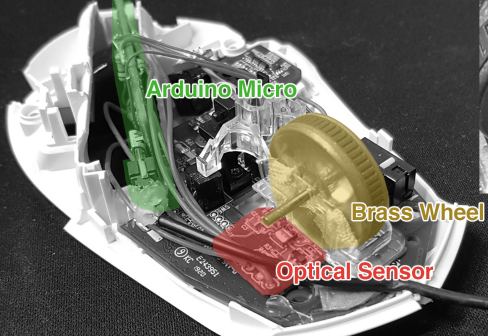
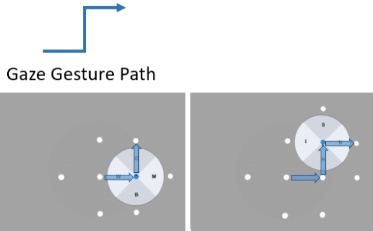
- Master's course at the KAIST HCI Lab.
- Why
- My subjects were gaze-based menu selection and touch interaction on the mouse wheel.
- How
- I drove haptic actuators directly, implemented the wireless messaging pipeline, and built the tools used to author haptic interaction.
- New
- The work appeared at ACM CHI 2022 and in the International Journal of Human-Computer Interaction.
- What
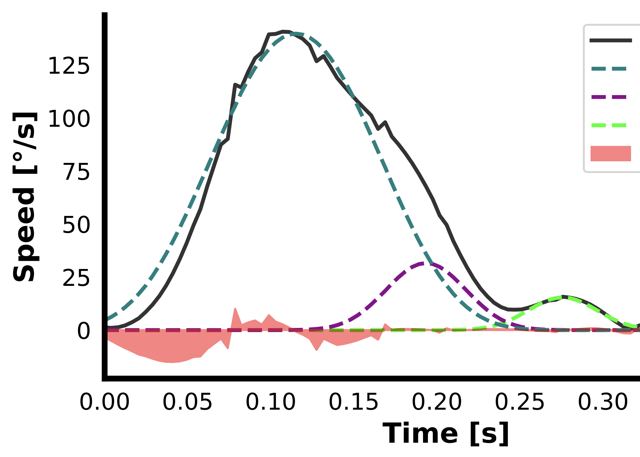
- Measured how professional gamers aim, at NVIDIA Research.
- Why
- The question was how aiming performance changes as display and input-device conditions change.
- How
- I measured and compared across conditions, and proposed a short-time, wavelet-inspired method for detecting mouse submovements.
- New
- arXiv 2026, first author.
- What
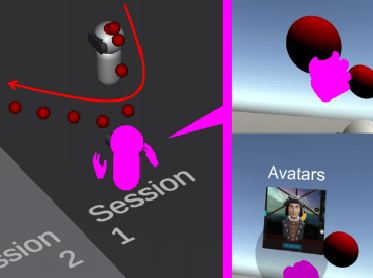
- Undergraduate researcher at the DGIST Smart Input Device Lab.
- Why
- When a mouse's polling rate falls out of step with the display refresh the cursor jitters, and how much that costs a person's aim was not known.
- How
- I built a rig that logs 8000 Hz input without loss and measured the cost experimentally, and analysed the Oculus Touch haptic feedback API.
- New
- ACM UIST 2021, first author.
- What
- Undergraduate intern at the KAIST Interactive Media Lab.
- Why
- Behavioural-measurement devices drift apart in time when run together, so they stop pointing at the same instant.
- How
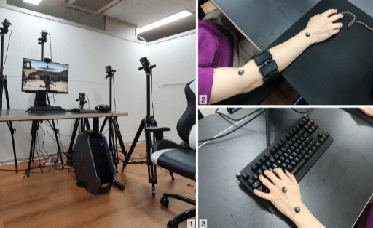
- I implemented a UDP protocol that records eight sensor types — eye tracker, motion tracker, webcam, Arduino — against one timestamp, and built a Pupil Labs serialisation library and a CS:GO scene-analysis system.
- New
- Data gathered on that rig went into Secrets of Gosu (ACM CHI 2021).
- What
- Software developer at a startup in the KAIST startup incubator.
- Why
- Computers for blind users cost several thousand dollars, and a phone's voice guidance reads everything aloud to whoever is standing nearby.
- How
- I built a braille input and output device shaped like a phone case, and the iOS application that drives it over Bluetooth.
- New
- Demonstrated to investors at KAIST TECH DAY.
Publications
Projects
- What
- An LLM chat server and panel UI over a SaaS that captures construction sites in 3D.
- Why
- When someone asks how many safety findings sit on level three, one number stops work and settles invoices.
- How
- Code grades every search result before the model speaks — complete set or sample — and the grade constrains which sentence the model is permitted to write. Where the grade is low the system asks back and narrows the scope.
- New
- The model earns its confidence through conversation rather than imitating it: the path from a sample to a complete set runs through the dialogue itself.
- What
- A harness that makes multiple agents carry a natural-language development spec through to the end.
- Why
- A spec written by a person leaves too much room for interpretation for a machine to judge how far it has got.
- How
- It pins the spec into a checkable state machine, splits it into work cards on a dependency graph, and runs agents with no human intervention until the graph is drained, producing verified commits.
- New
- Progress is measured by what is left in the graph rather than by what an agent reports.
unattended in production 5 months · issues ingested 924 · PRs generated automatically 571 · per issue ~30 min · merge rate 50.0% · root-cause accuracy 92.2% (as of 2026-08)
- What
- An agent system that owns a production bug queue end to end.
- Why
- Most of the time a bug costs goes not into the fix but into working out what broke under which conditions.
- How
- It polls Jira and picks its own issues, compresses the attached recording into keyframes for a VLM to recover the capture conditions, then reproduces in a real browser, fixes, refutes its own fix with a before/after check, and opens the pull request.
- New
- The point is that an LLM saying it is done never counts as the completion signal — verdicts are demoted to typed enums — and a biweekly self-audit files improvement pull requests against its own code.
- What
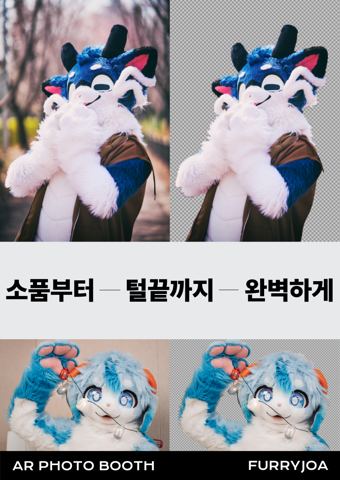
- An unattended kiosk that composites a person in a full-body costume between illustrated character layers and prints the result on the spot.
- Why
- Convention booths have unreliable networks, and a costume's fur and trim make an outline that chroma keying cannot cut cleanly.
- How
- From a single webcam, SAM2 separates the person and Depth-Anything-V2 estimates depth, placing them between the illustration layers. Everything runs on the device.
- New
- No green screen and no server: the booth is self-contained. Run at seven conventions in South Korea between 2024 and 2026.
downloads 56,000+ · broadcasts served 55,600+ (as of 2026-08)

- What
- A desktop bot app for streamers on Chzzk, Naver's live-streaming platform.
- Why
- Reading chat, answering donations and running screen effects while broadcasting is more than one person can hold at once.
- How
- It takes chat and donation events over a socket, runs eleven kinds of bot, and draws the results as a live overlay on the OBS scene — a Tauri v2, Angular and Rust (actix-web) desktop app with a NestJS cloud API.
- New
- Three operating-system builds are published through GitHub Actions, run single-handed without a commercial release service.
downloads 8,700+ · active users 400+ (as of 2025-03)
- What
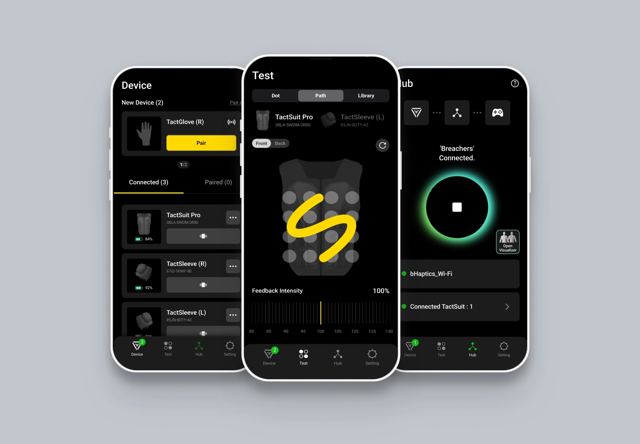
- An iOS application (SwiftUI) that drives bHaptics vests and gloves.
- Why
- To feel what happens in a game on your body, something has to sit between the PC or PSVR title and the hardware in real time.
- How
- It finds supported titles on the same Wi-Fi network by itself, takes their events, and relays them over BLE in under 20 ms, alongside firmware update (DFU) and account flows.
- New
- It ships with a Swift SDK folding device state and account state into the SwiftUI lifecycle, so the app and the SDK share one state machine.
- What
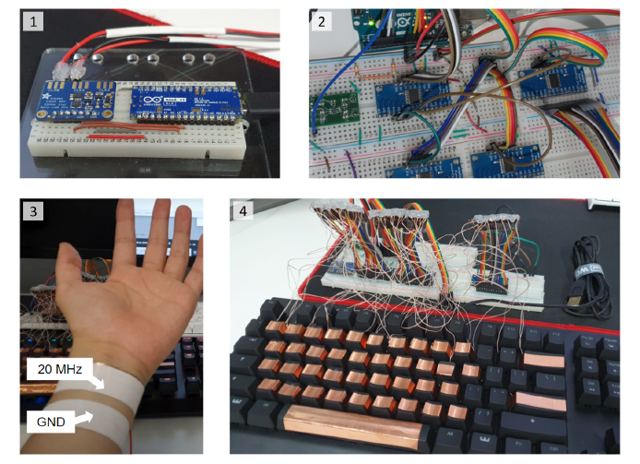
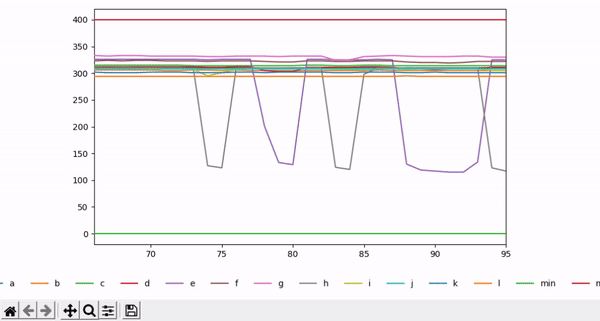
- A rig that mimics the physical behaviour of mechanical keys in order to find the right activation method for a touch keyboard.
- Why
- A touch keyboard gives no sensation at the moment of contact, so the hand cannot tell when the key registered.
- How
- Press depth, restoring force and other physical parameters are adjustable; capacitive sensing and an RF power detector measure contact, and multiplexing reads the key array. The control side is WPF and Arduino.
- New
- Activation is a variable to sweep rather than a fixed design constant, so the best point can be found by experiment.
More
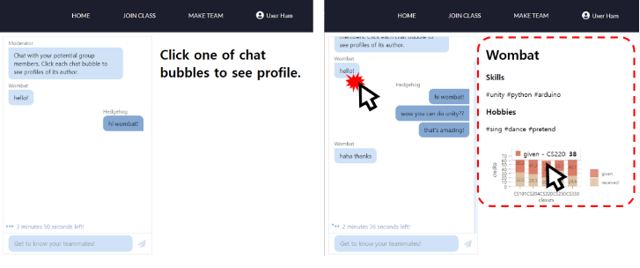
- What
- A real-time web platform for forming teams in KAIST classes.
- Why
- Remote teaching through the pandemic removed the places where students get to know each other, leaving nothing to judge a prospective teammate by.
- How
- A quiz surfaces candidates with matching interests, an anonymised chat with a moderating bot lets them talk, and a credit record shows how much each person contributed to earlier group projects. Built on React and the Firebase realtime database.
- New
- Anonymity lowers the social cost of choosing while the credit record still exposes a history of free-riding, so a choice can be both comfortable and informed.
- What
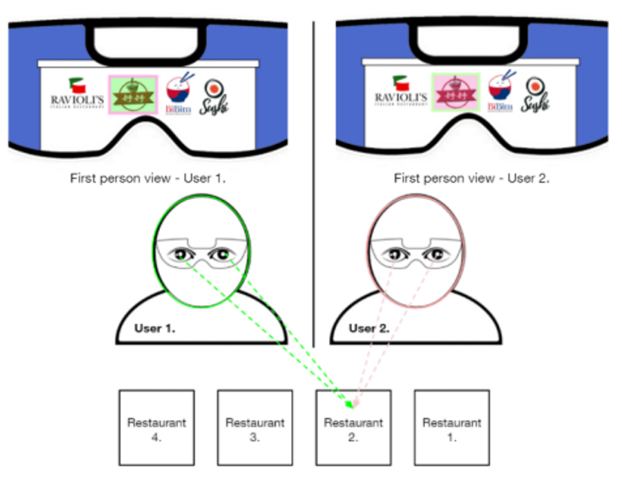
- A system that lets two people in augmented-reality glasses see where the other is looking in the same room.
- Why
- Speech and pointing are thin instruments for singling out something far away, and the moment you look at a handheld device you look away from the site.
- How
- Using HoloLens 2 it measures each person's eye and head direction, finds the moment their regions of interest coincide, and outlines that target in both headsets at once. Built in Unity (C#), sharing a coordinate frame through Azure Spatial Anchors and replicating state over Photon Unity Networking.
- New
- Rather than showing gaze continuously it shows it only where two people's attention meets, so the cue itself signals agreement.
- What
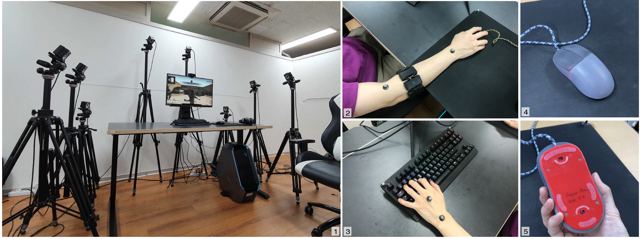
- A toolkit that records several behavioural-measurement devices against a single timestamp.
- Why
- Each device runs its own clock, so signals logged separately do not line up on the same instant afterwards.
- How
- It drives the devices together over UDP and serial, and cuts the number of system calls crossing the OS pipe to hold clock drift to 11 microseconds per second. Built with Arduino and Processing (Java).
- New
- Eight kinds of sensor at once — eye tracker, motion tracker, webcam, EMG. The data it collected went into Secrets of Gosu (ACM CHI 2021).
- What
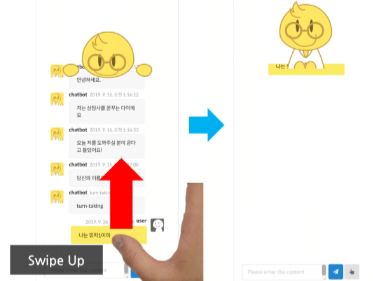
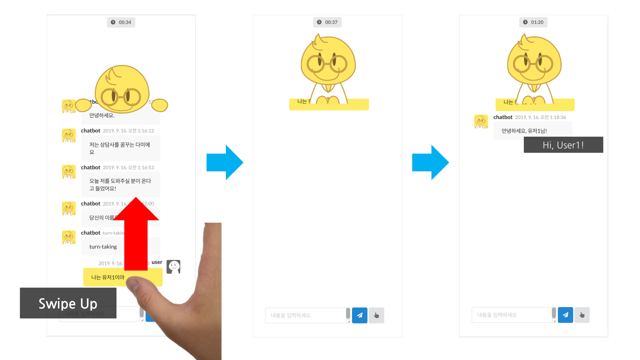
- An interaction technique (TwG) that carries emotion and turn-taking to a chatbot through touch.
- Why
- Chatbots have been treated in terms of natural language processing for text conversation, leaving little means to convey a user's emotion or manage whose turn it is.
- How
- Users send emotion and hand over the turn by touching a graphic interface; a Wizard of Oz study evaluated the resulting experience.
- New
- Emotional expression improved over conventional text-only chatbot interaction, and turn-taking became more natural.
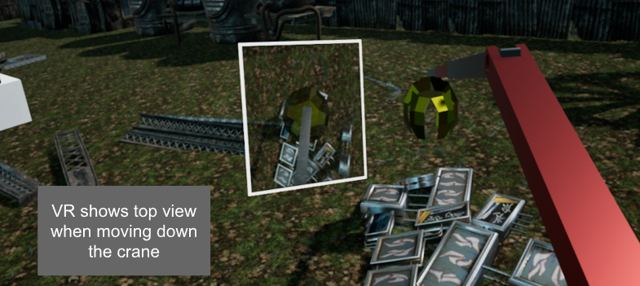
- What
- A VR interface for operating a crane.
- Why
- Crane control carries three problems at once — dizziness, the safety of people nearby, and distance perception. HIAB Korea posed the subject.
- How
- The viewpoint and the control scheme were designed against all three together.
- New
- Winner of the logistics and physical-computing track at Junction X Seoul.
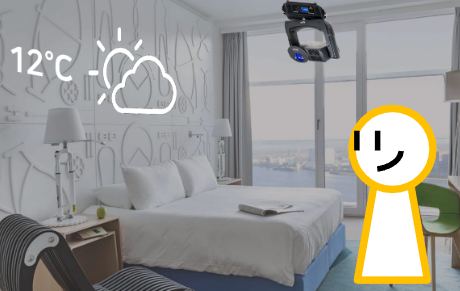
- What
- A system that throws a voice assistant's graphical interface onto a wall or desk with a projector.
- Why
- A voice-only assistant has no way to hand over a list or a table, and a fixed screen only works if you walk to it.
- How
- Kinect v2 finds the person and the surface, Arduino PWM steers the projector, and the display lands where it can be seen. Built in WPF (C#) and evaluated with a Wizard of Oz study and NASA-TLX.
- New
- The display follows the person, so using the assistant is no longer tied to wherever the speaker sits.
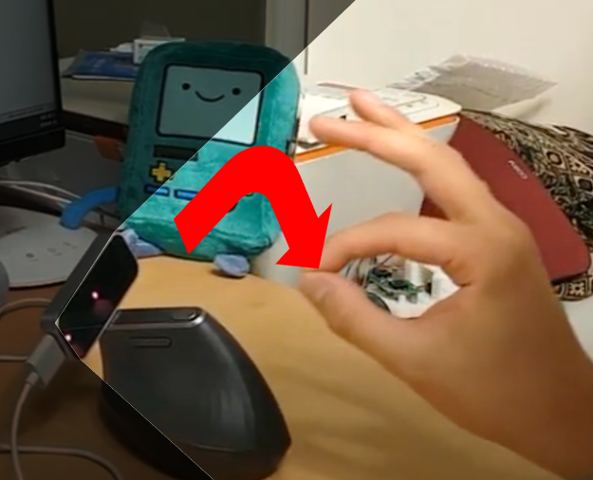
- What
- A technique that takes mid-air pinch gestures as input before the hand reaches a vertical mouse.
- Why
- A vertical mouse is held with the wrist upright, so nothing can be entered until the hand is already on it.
- How
- It recognises the pinch trajectory in eight directions: left, right, upper left, lower left, upper right, lower right, up and down.
- New
- The seconds before the hand touches the mouse become usable input time.
- What
- An interface that operates an Android phone with the eyes alone.
- Why
- Someone with quadriplegia cannot touch the screen, and gaze by itself settles where to look but not when to press.
- How
- It follows the gaze trajectory through a webcam to place the point, takes a wink as the press signal, and injects the touch event over ADB.
- New
- Together they cover the whole design space of single-point touch — tap, long press, drag — using eyes and eyelids only.
Awards
- By
- KAIST
- Year
- 2022
- By
- ACM SIGGRAPH
- Rank
- Honorable Mention
- Year
- 2022
- By
- ACM SIGCHI
- Rank
- Honorable Mention (top 5%)
- Year
- 2021
- By
- DGIST
- Rank
- 2nd place
- Year
- 2020
- By
- Intel ISEF
- Rank
- Finalist
- Year
- 2016
- By
- Seoul Metropolitan Science Exhibition Hall
- Rank
- Special Prize (Grade 1)
- Year
- 2015
- By
- National Information Society Agency
- Rank
- Silver
- Year
- 2015
- By
- Korea Institute of Information Scientists and Engineers
- Rank
- Bronze
- Year
- 2014
- By
- National Information Society Agency
- Rank
- Gold
- Year
- 2014
- By
- Korea Institute of Information Scientists and Engineers
- Rank
- Special Award
- Year
- 2014
- By
- Ministry of Science, ICT and Future Planning
- Rank
- Grand Prize
- Year
- 2013
Education
- Org
- KAIST
- Degree
- M.S.
- Major
- School of Computing
- Advisor
- Geehyuk Lee
- Org
- DGIST
- Degree
- B.S.
- Major
- Interdisciplinary Engineering
- Org
- University of California, Berkeley
- Degree
- Visiting Student
Teaching & Talks
- Org
- XREAL
- Role
- Invited Talk
- Org
- Hongik University
- Role
- Invited Talk
- Org
- KAIST
- Role
- Teaching Assistant
- Org
- KAIST
- Role
- Teaching Assistant
- Org
- DGIST
- Role
- Undergraduate Tutor
Service
- Org
- ACM UIST
- Role
- Reviewer
- Track
- Full Papers
- Year
- 2025
- Org
- ACM CHI
- Role
- Reviewer
- Track
- Full Papers
- Year
- 2024
- Org
- ACM DIS
- Role
- Reviewer
- Track
- Papers and Pictorials
- Year
- 2023